

Building Without Buy-In: Lessons from Lebanon’s Cultural Heritage Project
Project Date
2019
Theme
Development Impact
The Challenge · Evaluating the "Cultural Anchor" for Post-Conflict Recovery
Lebanon was the perfect testing ground for an ambitious idea. Conquered successively by Phoenicians, Greeks, Romans, Arabs, Crusaders, Ottomans, and the French, the country inherited a remarkably rich cultural heritage—world-renowned World Heritage sites, vibrant festivals, diverse cuisine and music, and historic architecture layered through its urban cores. Could this cultural wealth become the foundation for postconflict recovery?
The World Bank's Cultural Heritage and Urban Development Project (CHUD) was designed to answer that question. From 2003 to 2016, this $119 million initiative worked across five historic cities—Byblos, Baalbek, Saida, Tripoli and Tyre—aiming to physically connect ancient heritage sites with their surrounding neighborhoods to create economic opportunities through tourism while improving daily life for residents.
Our challenge was to perform a crucial evaluation: to determine what worked, what didn't, and why, and whether this massive, complex intervention truly delivered for the people it was meant to serve.
The Mission · Shaping Future Practice
This evaluation, commissioned by the Independent Evaluation Group (IEG)* of the World Bank, served two strategic purposes:
- Shape Emerging Practice · Provide crucial lessons on placing culture at the heart of city reconstruction and recovery.
- Inform Regional and Global Strategies · Guide regional strategies for the Middle East and North Africa (MENA) region and the World Bank's broader Fragility, Conflict and Violence Strategy.
*The Independent Evaluation Group (IEG) of the World Bank conducts in-depth fieldwork evaluations on 20-25 percent of the World Bank's lending operations annually, prioritizing projects that are innovative, large, or complex and likely to yield important lessons.
Our Approach · Deep Dive into Lived Experience
The assessment unfolded in three phases between October and December 2018, strategically using targeted qualitative fieldwork to validate (or challenge) initial findings:
-
-
-
-
- Phase 1 · Document Review
Document review and stakeholder interviews in Washington, DC. - Phase 2 · Fieldwork
Fieldwork in Lebanon including meetings with implementing agencies, government officials, and cultural heritage experts, plus site visits to all five historic cities. - Phase 3 · Targeted follow-up
In-depth follow-up in Baalbek, Tripoli, and Saida to probe implementation challenges through interviews with project-affected residents and workers.
- Phase 1 · Document Review
-
-
-
Key insights · The Gap Between Design and Reality
1. Project Design
These two images capture the complex reality of women in Haryana, one of India’s most conservative states: women veiled in the presence of men and elders coexist with female wrestlers who compete in traditionally masculine spaces.
| What Worked (Design Successes) | What Did Not Work (Design Flaws) |
|---|---|
| Heritage as Anchor for Renewal: Successfully leveraged cultural heritage to anchor the revitalization of historic cities, while simultaneously halting physical decay. | One-Size-Fits-All: Urban rehabilitation was designed too uniformly for five historic cities with widely varying contexts and social needs. |
| Resilience and Commitment: The project held firm despite civil strife, maintaining commitment and continuing work even through active conflict and sporadic asset damage. | Overly Ambitious Scope: Urban upgrading investments were too ambitious given the financing and time allowed. |
| Strategic Buy-In: Achieved buy-in across diverse religious and cultural communities—critical in post-civil war Lebanon. | Infrastructure-Led, Not People-Centered: Designs prioritized infrastructure (e.g., extra-wide sidewalks and bollards) over local commerce, creating a "clash of values" in economically dense areas. |
| Built to Last: Strengthened regulatory and institutional capacity to sustain efforts beyond project completion. | Rigid Implementation: Inflexible designs led to costly renegotiations after construction was complete (e.g., sidewalks redone in Tripoli, traffic gains in Baalbek reversed due to vendor outcry). |
The Discovery
Technical excellence without social grounding. The designs were structurally sound and institutionally strong, but lacked citizen engagement and failed to integrate local economic and social needs.
2. Project Implementation · The Hidden Cost of Aesthetics
CHUD delivered measurable physical transformation, but the qualitative interviews revealed severe contradictions where technical success directly harmed the lived experience of residents.
What Worked (Physical Transformation Successes)
CHUD delivered measurable physical transformation:
-
- Historic preservation: Restored 13th-century Khan al-Askar in Tripoli
- Effective resettlement: Relocated 71 families into newly built nearby apartments
- Dramatic scale: Expanded public space from 9,840 to 274,000 square meters and rehabilitated facades from 42,582 to 311,100 square meters
- Infrastructure multiplier: Pedestrian spaces enabled underground water and sewer reconstruction
What Did Not Work
a. Economic Impacts
-
-
-
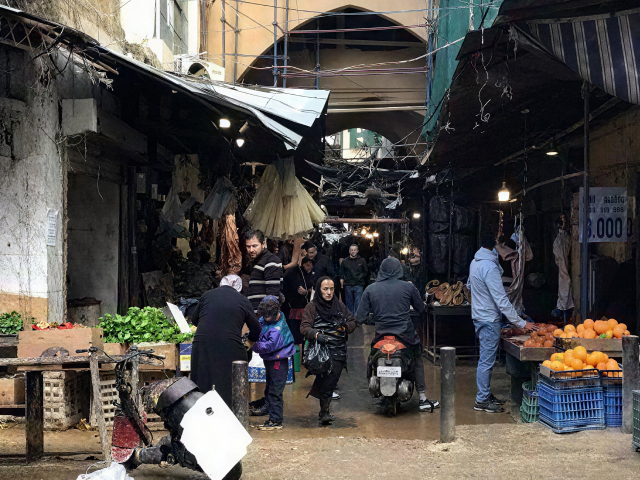
- Tourism vs local commerce
The message is clear. They want this area to become touristic. It is not for commercial activities that service the residents of Tyre. It is a matter of time that we leave. They should compensate us, and we will go away.
- Tourism vs local commerce
-
-
-
-
-
- Design mismatched to context
By what logic have they tightened the streets for the sake of the sidewalk? These sidewalks are a big mistake. We are not the Champs-Elysées!
- Design mismatched to context
-
-
-
-
-
- Decline worse than wartime
Even during the war, commercial activity was high. We used to get the United Nations Interim Force soldiers here who would shop. Now we have reached the worst phase of war because it is a war against commercial activity.
- Decline worse than wartime
-
-
The Discovery
Pedestrianization was aesthetically pleasing but displaced traditional livelihoods. Project goals prioritized tourism above the daily commerce that serviced and sustained local residents.
b. Surface Treatment Not Full Restoration
-
-
-
- Half-painted windows
“I begged them to paint it all. I am really ashamed to open my window… The shutters are blue from outside and brown from inside!”
- Half-painted windows
-
-
-
-
-
- Half-cleaned arches
The upper part of the arch's stones was cleaned while the lower part remained as is, blackened through time. We implored them to complete the job, but they only care about what's visible from the steps.
- Half-cleaned arches
-
-
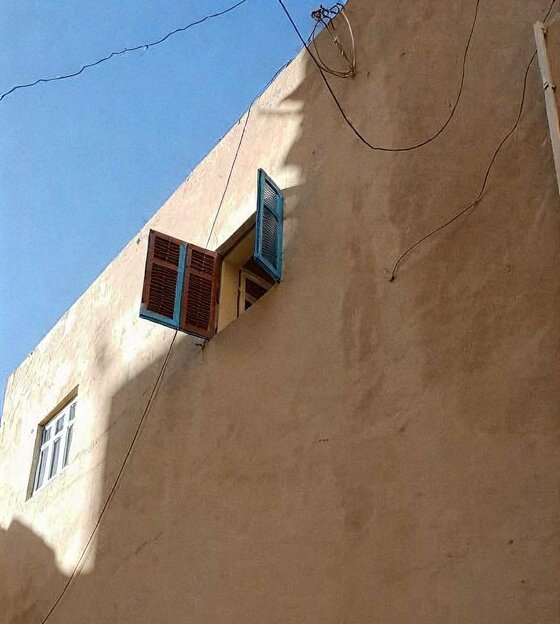
Half-painted windows
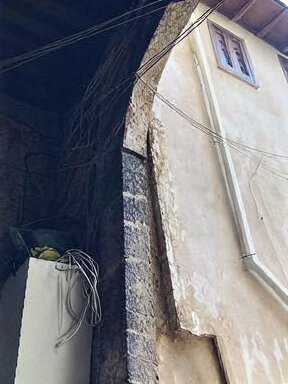
Half-cleaned arches
The Discovery
Tourist-facing work left residents behind.Prioritizing exterior facades over complete, authentic restoration led to resentment and a lack of ownership by the people who live in the historic sites.
c. Beautiful Design Compromised Daily Safety
Interviews revealed that the new designs failed critical safety and functional tests for residents:
-
-
-
- Hazardous stone steps with no handrails
“The old cement steps were much safer. Now we go down the stairs holding our heart in our hands, frightened to fall. They're greasy like soap.”
- Hazardous stone steps with no handrails
-
-
-
-
-
- Half-cleaned arches
The upper part of the arch's stones was cleaned while the lower part remained as is, blackened through time. We implored them to complete the job, but they only care about what's visible from the steps.
I had to throw all the shoes I have out and buy new ones with rubber shoehorn to be able to walk outdoors on these steps!
- Inadequate emergency response plan
When we asked the municipality, what would you do in case of fire to save the people who live in the souk? They told us not to worry,"We will cut the stakes if something happens."
- Half-cleaned arches
-
-
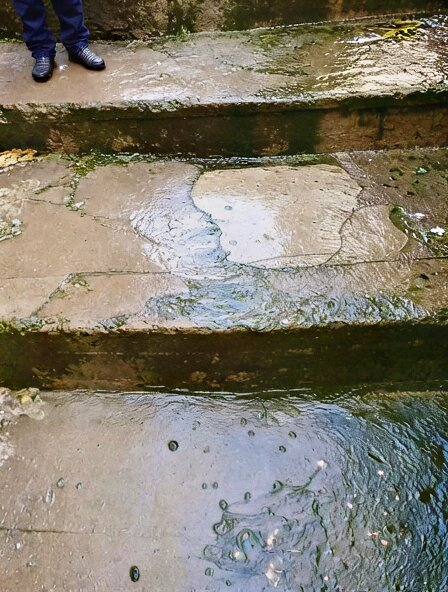
Old cement steps that residents found safer
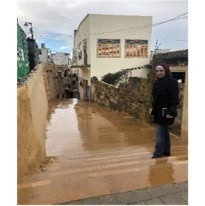
New polished stone steps residents described as 'slippery like soap’
The Discovery
Beautiful design compromised daily safety. Interventions that prioritized the aesthetic experience for tourists and planners created physical hazards and anxiety for the local population.
The Impact · Why Technical Success Requires Social Buy-In
CHUD proved that cultural heritage can anchor urban recovery in fragile states, achieving massive physical transformation and cross-sectarian buy-in. Yet, the evaluation revealed an essential lesson: technically sound interventions require genuine community engagement to succeed.
The Breakthrough
The turning point came through interviews with residents, business owners and shoppers in souks and historic urban cores. What planners celebrated as revitalization, merchants experienced as displacement; what designers saw as heritage preservation, homeowners viewed as incomplete and inauthentic; what engineers deemed beautiful, residents found hazardous.
Publication
The Team & their Contribution

Lauren Kelly
Lead Evaluation Officer, Independent Evaluation Group, World Bank
Key Contribution
Task Team Leader. Led evaluation design, site visits, report structure, and writing
Monica Biradavolu
Lead Qualitative Researcher
Key Contribution
Co-led Phases 1 and 2; Led Phase 3 fieldwork; Contributed to document review, interviews, field visits and report writing

Rima Abou-Chakra
Field Researcher
Key Contribution
Conducted Phase 3 interviews with project-affected residents in Baalbek, Tyre and Tripoli
Hoda Zeaytar
Field Researcher
Key Contribution
Conducted Phase 3 interviews with project-affected residents in Baalbek, Tyre and Tripoli
Partners and Funders
This work was made possible through collaboration with leading institutions
Research Partner

Fieldwork Partner
Funded By