



Is There an Underside to Economic Growth? · The Malaysian Paradox
Project Date
2023
Theme
Macro Perspectives
The Challenge · Resolving a paradox
Malaysia is celebrated globally for its "economic miracle”, high GDP growth and sharp reductions in poverty over 60 years. Yet, in 2018, the long-ruling party was voted out, fueled by massive public discontent with the state of governance. The core challenge was to resolve this paradox: Why did economic success leave so many citizens feeling betrayed and unhappy?
The Mission · Listening Beyond the Statistics
Our mission was to hear directly from ordinary Malaysians—men and women, urban and rural residents, across ethnicities and regions about their everyday lives and struggles. We wanted to find out whether their collective narratives could reveal the hidden costs of rapid economic growth that official statistics failed to capture.
Our Approach · Look Below the Surface of the Data
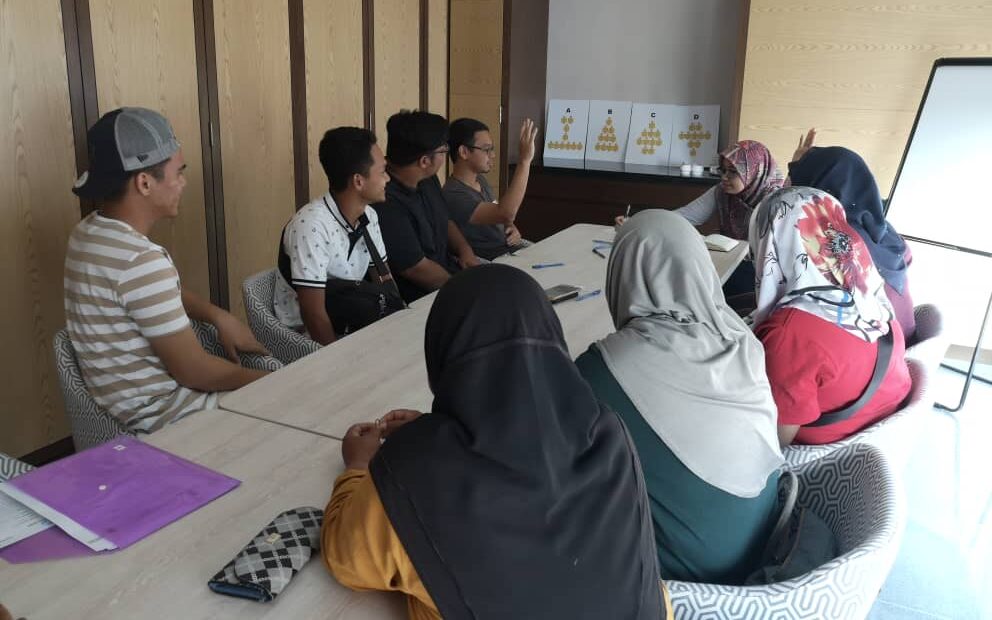
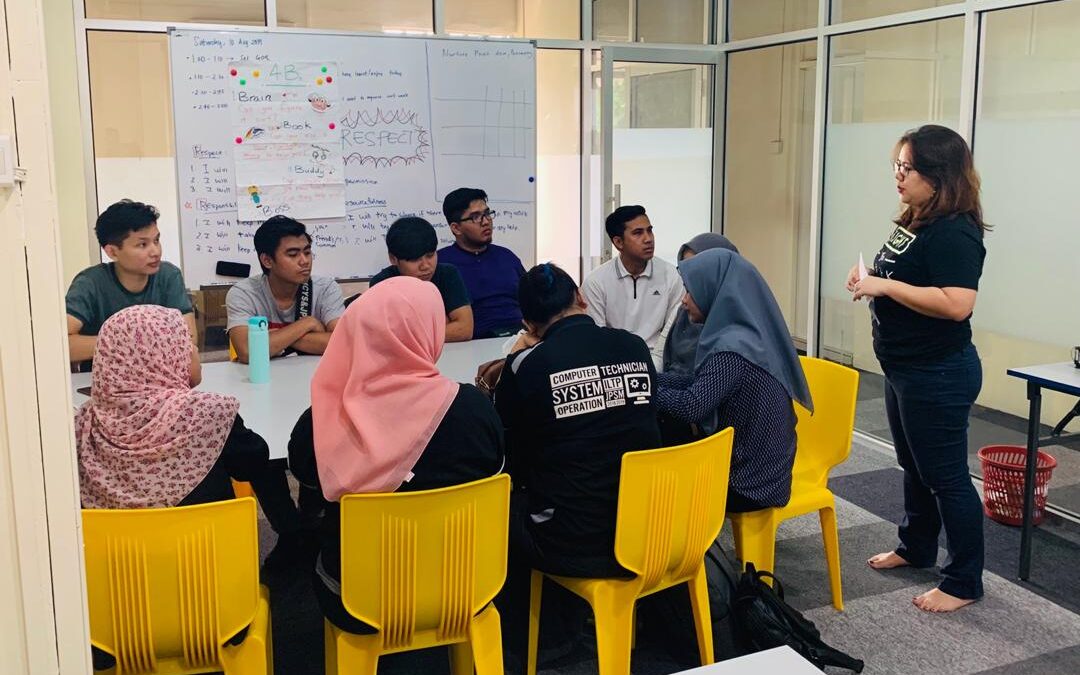
We conducted 56 focus discussion sessions with 473 Malaysians from three states—Selangor, Terengganu, and Sabah—representing Bumiputera Malays, Chinese, Indians and ethnic groups native to the state of Sabah. Participants came from the lower half of the income distribution: poor, lower-middle-class, and middle-class households. Five open-ended questions guided the conversations.
| # | Domain | Question |
|---|---|---|
| 1 | Inter-generational change | How is your life different from that of your parents’ generation? |
| 2 | Cost of living | Compared to 5 years ago, is your life easier, harder or the same? Why? |
| 3 | Government | What is the role of the government in shaping these changes? |
| 4 | Private Sector | What is the role of the private sector in shaping these changes? |
| 5 | Aspirations | What are your hopes and dreams for your country? |

Key insights · The Hidden Costs of the Malaysian Miracle
1. Intergenerational Progress · Match between Numbers and Voices
- Better Work · More diverse employment opportunities, with less physical labor and higher pay.
“Twenty-five years ago, we moved from rubber plantations to industries. The money came from these opportunities.”
- More Education · Rising educational attainment across generations.
“My parents did not go to school. I went to Form 2 only. My children are still studying. I want them to go to university,”
- Easier Mobility · Better infrastructure, especially roads and widespread car ownership.
“My nephew died 25 years ago. We took him to the hospital through jungle roads. It took too long. The roads are better now. There’s development.”
2. Income Paradox · Disconnect between Data and Lived Reality
The disconnect between official data and lived reality was immediate and striking.
When participants were asked whether their quality of life was harder, easier, or the same compared to five years ago, 55 percent said life was harder—nearly three times more than the 19 percent who felt things had improved.
This feeling of decline was rooted in the flaw in official classifications. Despite earning a lower-middle-income monthly salary of RM 3,000–4,000 (∼$630–$830), urban residents rejected their classification:
“Even though my income is RM 3,000-4,000, I am part of the urban poor because things in the city are expensive.”
A rural participant echoed this sentiment, describing a new phenomenon—people who appear financially stable but are struggling:
“There’s a term “miskin bandar” [urban poor]. For those who have an income of RM 3,000 in Kuala Lumpur but can’t survive and pay bills...I feel sad…Although they don’t really look poor, in terms of finances, they are poor.”
The Discovery
Official income thresholds can miss the mark entirely. What matters is not just how much people earn, but whether that income allows them to live with dignity and security in their actual circumstances. Growth creates a lifestyle floor that constantly rises.
3. Six sources of struggle · Growth's Hidden Toll
Participants articulated six consistent reasons for feeling worse off than their parents' generation, which highlight the sociological side effects of rapid growth:
Income-expense imbalance: Salaries haven't kept pace with city living costs, and expectations have shifted dramatically. Participants noted that their parents raised large families on modest incomes because money had greater purchasing power. Urban migration no longer guarantees upward mobility.
“What used to be luxuries have become necessities.”
Unaffordable housing: Despite improvements in construction quality, homeownership has moved out of reach. The previous generation could acquire land and build homes without financial hardship.
“I am more educated, but my parents had land, had houses. I have nothing. Just a car.”
Overwork and multiple jobs: People talked about being exhausted from overwork—most households now need two incomes just to get by, and often each person is juggling multiple jobs.
“Most people in my salary range work two jobs. Having two jobs makes it more secure. I cannot go up. I cannot go down. I am stuck here. I am trapped.”
Rising debt and depleted savings: Many are barely staying afloat financially, with debt piling up and savings dwindling, pushing some families into bankruptcy.
“At month’s end, I feel like going insane because I never have enough to settle all basic payments.”
Increased stress and unhappiness: All of this has created more stress and unhappiness compared to what their parents experienced.
“Something that can be provided physically, we children are better off. But something that is about the mind and the soul, we are not better off.”
Growing social divisions: People noticed growing divisions in society, with less mixing and connection between different ethnic groups than before.
“Fewer people are united now. In the past, Malays were one with Indians and Chinese and we communicated well. It is not the case right now.”
The Discovery
Growth creates its own psychological and social pressures. Rising incomes can mask rising expectations, lifestyle inflation, debt burdens, and psychological strain—none of which show up in poverty or inequality statistics. Understanding whether development is working requires listening to people describe their actual lives, not just measuring their incomes.
4. The Geography of Status: From Security to Purchasing Power
We asked participants to choose between two scenarios:
| Scenario | Your income | Average Person’s Income |
|---|---|---|
| 1 | RM300 | RM200 |
| 2 | RM600 | RM800 |
The responses revealed a striking geographic pattern that challenged conventional theories about growth and social status.
| Region | Primary Preference | Key Rationale |
|---|---|---|
| Wealthy, Urban Selangor |
Higher Absolute Income (Scenario 2) 81%Chinese and 62% Bumiputera preferred Scenario 2 |
Focused on purchasing power, meeting commitments, and saving. Some viewed concern with social status as a character flaw."I don't really care about others. I need more money." |
| Poorer, Rural Sabah one of Malaysia's poorest regions | Higher Relative Income (Scenario 1) | Described status as a "comfort feeling," providing security and meaning within traditional social hierarchies.
|
The Discovery
Economic development appears to shift people's concerns from social position (status) to absolute living standards (purchasing power).
In less developed, more rural areas where traditional social hierarchies remain strong, relative standing and status provide security and meaning. But in wealthier, more urbanized areas where individual advancement matters more than collective standing, people focus on their own purchasing power rather than comparisons with others.
This suggests that growth doesn't necessarily increase concerns about status—it may actually reduce them—but it does raise the baseline for what counts as an acceptable standard of living for everyone.
The Impact · Rethinking the Metrics of Success
This research exposed a critical blind spot in economic policymaking: success isn't just about lifting incomes, but about whether people feel their lives are genuinely improving. The stories revealed that economic growth fundamentally transforms what people need to feel secure, respected, and connected.
The Breakthrough: Explaining the Paradox
We heard people describe their struggles and we discovered that poorer, rural Malaysians cared deeply about their social standing, while wealthier, urban residents focused on their purchasing power. Now we needed to make sense of it all. What could explain why successful economic growth leaves so many feeling left behind?
Enter two social theorists: Karl Polanyi and Fred Hirsch. Their ideas, written decades ago about Western economies, suddenly illuminated what we were seeing in Malaysia:
- Growth tears apart social fabric (Polanyi): Markets pull people away from protective community networks, leaving them vulnerable and isolated despite material gains.
- Growth raises the bar for dignity (Both): What counts as an acceptable standard of living keeps rising, so people feel they're falling behind even as their incomes increase.
- Growth privatizes what was once free (Hirsch): Open land, clean air, affordable housing—things everyone once accessed—become expensive and congested.
- But there's a twist: Hirsch predicted wealthier societies would care more about status. We found the opposite—development actually shifted people's concerns from social position to absolute living standards.
The lesson for policymakers is clear: Economic success must be measured by lived reality and social well-being, not just blunt monetary figures such as GDP growth, poverty rates and income brackets.
Publication
Asadullah, M. Niaz, Monica Biradavolu, Vijayendra Rao, and Kenneth Simler. 2024. "Is There an Underside to Economic Growth? A Mixed-Methods Analysis of Malaysia." Policy Research Working Paper 10968. Washington, DC: World Bank.
The Team & their Contribution
M. Niaz Asadullah
Professor, University of Reading, UK; Adjunct Professor, Chulalongkorn University, Thailand; Senior Fellow, Institute for Democracy and Economic Affairs (IDEAS), Malaysia
Key Contribution
Contributed to the study design and quantitative analysis, including poverty and inequality measurement and growth incidence analysis.
Monica Biradavolu
Principal Investigator, QualAnalytics
Key Contribution
Designed and led the qualitative research methodology, trained the qualitative data collectors, supervised data collection, analyzed the qualitative data, and wrote up the qualitative findings.
Vijayendra Rao
Lead Economist, Development Research Group, The World Bank
Key Contribution
Conceptualized the mixed-methods approach and study design, provided theoretical framing drawing on Polanyi and Hirsch, and led the integration of qualitative and quantitative findings.

Kenneth Simler
Independent Economist (formerly Senior Poverty Economist for Malaysia, World Bank, 2016-2021)
Key Contribution
Contributed to study design, quantitative data analysis, and interpretation of findings within the Malaysian policy context.
Partners and Funders
This work was made possible through collaboration with leading institutions
Research Partner

Fieldwork Partner

Funded By